Article
Refinish or Replace? How to Read an Old Hardwood Floor
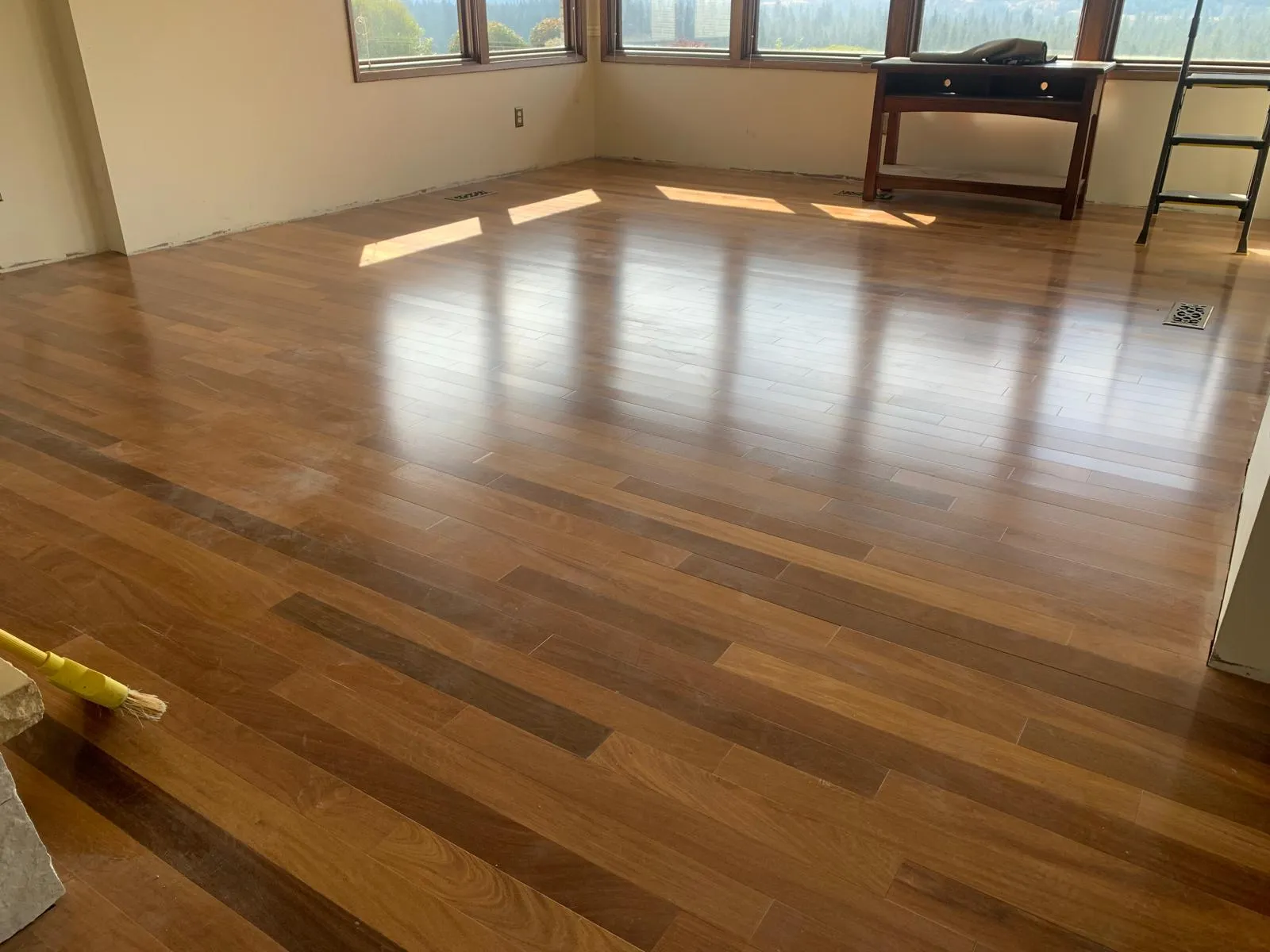
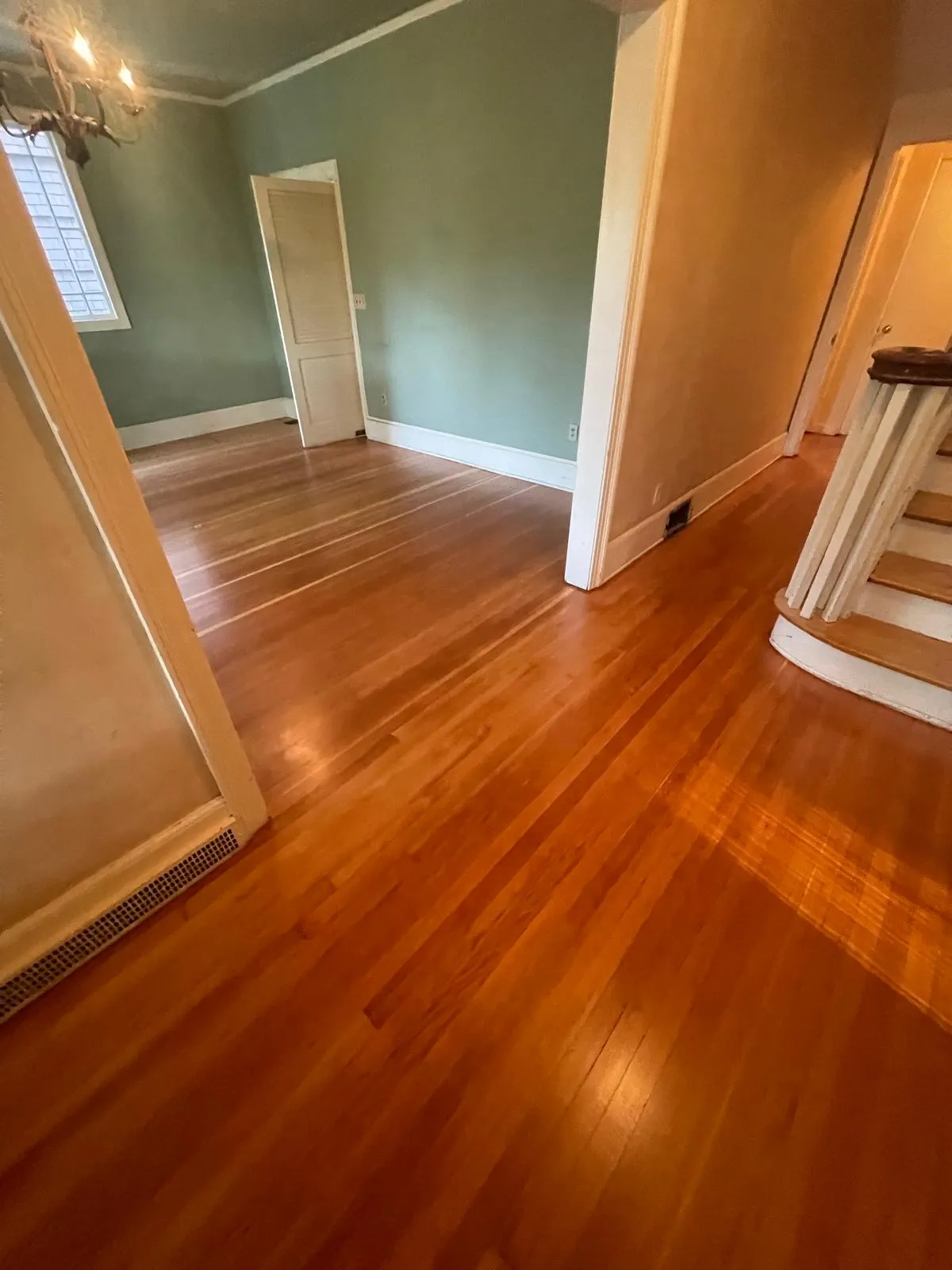
People call us about a tired floor and half of them already have a verdict in their head: rip it out. Usually they’re wrong. A hardwood floor that looks beat up is usually just showing a worn-out top coat, not damaged wood. The wood underneath — especially in an older Spokane home — is frequently the best material in the house.
So before anyone tears anything out, here’s how to actually read a floor.
First question: is it solid wood, engineered, or a veneer?
This one decision changes everything, because only real wood gives you room to sand.
Solid hardwood is a single piece of wood, about three-quarters of an inch thick all the way through. What you can actually sand off, though, is only the wood sitting above the tongue and the milled groove — roughly a quarter inch of it, because below that line you’d hit the nails and the joint. That quarter inch is your refinishing budget, and on a solid board it’s usually enough for several refinishes over the floor’s life.
Engineered hardwood is different. It’s a thin layer of real wood — anywhere from a couple millimeters to about six — laminated over plywood. You can sand a thick-veneer engineered floor once, maybe twice, if you know exactly how deep the wear layer runs. Sand a thin one and you go straight through to the plywood, which ends the conversation.
If it’s laminate or luxury vinyl printed to look like wood, there’s nothing to sand at all. The grain is a photograph. When that surface wears, replacement is the only move.
Not sure which you have? Pull a floor vent or look at a doorway threshold where you can see the edge of a board. Solid wood shows the same grain top to bottom. A veneer shows a seam.
How much wood is left
The honest way to measure remaining life is to look at a cut edge — that vent again, or a spot near a heat register. On a solid plank, measure from the top of the board down to the top of the tongue. That distance is your sanding budget. A full sand-and-refinish takes off a hair: usually somewhere around a thirty-second of an inch, sometimes less, depending on how much damage we’re chasing out. Do that math and most solid floors have several refinishes still in them.
There’s also a simpler tell. If you can already see the heads of the nails sitting flush with the surface, or the tongue edge is peeking out along the seams, that floor has been sanded to the end of its life. At that point sanding again would hit metal and split boards. That’s a replacement.
Signs the floor is worth saving
Most of what makes an old floor look dead is surface-only:
- Gray, cloudy, lifeless boards. That’s oxidized old finish and ground-in grime, not damaged wood. It sands off and the grain comes back underneath.
- Fine scratches and scuffs you feel with a fingernail but can’t catch. Those live in the finish. Gone after the first pass.
- Sun-faded patches where a rug or furniture sat. Different exposure, same wood. Sanding to bare wood evens it out, and a fresh stain reads as one continuous color again.
- A dull, patchy sheen that no amount of mopping fixes. The seal has simply worn thin. New finish, new floor — visually.
If your floor is mostly this list, you’re looking at a refinish, not a rebuild. This is the core of what our floor restoration crew does: sand the old finish off, address the damage board by board, and put a new life on top.
Signs it’s time to replace — or at least think hard about it
Some damage goes deeper than sanding can reach:
- Boards that flex, bounce, or feel spongy underfoot. That’s usually a subfloor or joist problem, or rot, and no refinish touches it.
- Deep water staining that’s black, not gray. Gray lifts. Black means the water reached the wood fibers and often the subfloor below. Widespread black staining, cupping that never flattened, or a musty smell points to replacement of at least those sections.
- Termite or pest tunneling. Structural, not cosmetic.
- Boards already sanded to the nails, per the measurement above.
Here’s the part people miss, though: damage is often local. A water-ruined stretch under a leaked window doesn’t condemn the whole room. Because old-growth oak and fir are hard to match with today’s lumber, we’ll frequently pull and replace just the failed boards, weave in matching stock, then sand and stain the whole floor as one surface so the repair disappears. That’s a middle path between “live with it” and “gut it.”
Why solid wood is almost always worth the fight
Wood milled before roughly mid-century — the fir and oak under a lot of Spokane’s South Hill and older Cheney homes — is denser and tighter-grained than most of what a lumberyard sells now. It came off slower-growing, old-growth trees. You can’t buy that character new at any price, and it’s already installed and paid for. Sanding it back usually costs less than a tear-out and keeps the floor that gives the house its age and warmth.
There’s a regional wrinkle worth naming. Eastern Washington runs dry indoor air for months every winter, then swings damp in spring. Wood moves with that cycle. A fresh, well-sealed refinish keeps the surface stable while the wood breathes with the seasons, which is part of why keeping a sound old floor sealed and maintained beats starting over.
What a refinish actually gets you
A proper sand isn’t one pass with a machine. It’s three passes with the drum sander, stepping to a finer grit each time, plus edge work by hand where the big machine can’t reach. Then stain — and we always test the color on your actual boards first, because the shade in the can never matches the shade on your wood. Then seal, water-based or oil, your call.
Timelines depend on square footage, the number of board repairs, and how many coats the finish needs to cure, so treat any number as a range until someone’s seen the floor. What you get at the end is the grain back, the color even, and a fresh seal standing between your wood and another decade of Spokane winters. Our sanding and staining service is exactly this work, start to finish.
One last note on who’s doing it. AG Floor Covering’s parquetry work earned a National Wood Flooring Association Wood Floor of the Year award — the same eye for grain and finish that goes into a competition floor is what reads an old one and decides, honestly, whether it’s worth saving. If you’re staring at a floor and can’t call it, get a free estimate and we’ll tell you straight, in person, before anyone lifts a board.