Article
Hardwood vs. LVP and Laminate: How to Choose the Right Floor
We install hardwood, laminate and luxury vinyl plank, so we have no reason to push wood on you when it isn’t the right fit. If wood is wrong for your kitchen, we’ll say so and lay LVP instead. Here’s the honest comparison — where each floor actually earns its price in a Spokane home.
Start with the honest headline: there is no best floor. There’s a best floor for a specific room, a specific budget, and a specific household. A busy family with three dogs and a basement rec room has a different right answer than a couple restoring a 1912 Craftsman. Let’s sort it by scenario.
What each of these actually is
Solid hardwood is a plank of real wood, top to bottom. It can be sanded and refinished multiple times, which is why a solid floor can outlast the people who install it.
Engineered hardwood is a real-wood surface over a plywood core. It’s still real wood underfoot, and its layered construction moves less when indoor humidity swings — which, in Eastern Washington’s dry winters, is a real advantage. Depending on the thickness of that top layer, it can usually take a refinish once or twice.
Laminate is a photo of wood under a hard, clear wear layer, pressed onto a fiberboard core. Today’s versions look convincing and resist scratches well. But the core is wood-based, so standing water is still its enemy.
Luxury vinyl plank (LVP) is fully synthetic and genuinely waterproof. Modern LVP is a different product than the vinyl your parents had — scratch-resistant, comfortable underfoot, and forgiving of the exact conditions that ruin other floors.
Where LVP and laminate honestly win
Wet rooms and basements. This one isn’t close. Kitchens that see spills, bathrooms, laundry rooms, mudrooms where Spokane snowmelt comes in on boots — waterproof LVP belongs there. Wood can go in a kitchen with care, but a basement on a concrete slab, where ground moisture pushes up year-round, is LVP or engineered territory, not solid plank. Put solid wood on a damp slab and it’ll cup on you.
Tight budgets. Material and installation for LVP or laminate generally land well below a solid hardwood job. Exact numbers depend on the product, the square footage and the condition of your subfloor — so treat any figure as a range until someone measures — but the gap is real and consistent.
Speed. LVP click-lock systems can go down fast, and some rooms are walkable the same day. A hardwood install, especially one that needs sanding and finishing on site, is a multi-day commitment with cure time you can’t rush.
Hard daily wear — kids and pets. If your floor’s daily reality is claws, dropped toys and juice, a good waterproof LVP takes it in stride. Wood shows that life. Some people want the wear; plenty don’t.
The catch with both is that their whole lifespan lives in that top wear layer. When it wears through, there’s nothing underneath to renew — you replace. And a cheap install undoes a good product, which is why the underlayment and the seam pattern matter more than most people realize. That’s most of what separates a floor that holds up from one whose board edges lift and open into gaps. Our laminate and LVP installation work matches the underlayment to your actual subfloor instead of using one default for every job.
Where solid hardwood pulls ahead
Decades, not years. A well-kept hardwood floor is measured in generations. Because it can be sanded back to bare wood and refinished several times over its life, one floor absorbs style changes, wear and the occasional disaster without ever being torn out. LVP and laminate, when they’re done, are done.
Repairability. Gouge a wood floor and we can lift the board, weave in a match, sand and blend it so the fix vanishes. Damage a plank of LVP and the repair is a swap — fine, but it can show if the batch has faded. Wood ages into a whole; synthetic ages in pieces.
Resale. Real hardwood is one of the few flooring materials that buyers in this market specifically look for and pay for. LVP is accepted and often expected in the right rooms, but “solid hardwood throughout” still moves the needle on an older Spokane home in a way vinyl doesn’t.
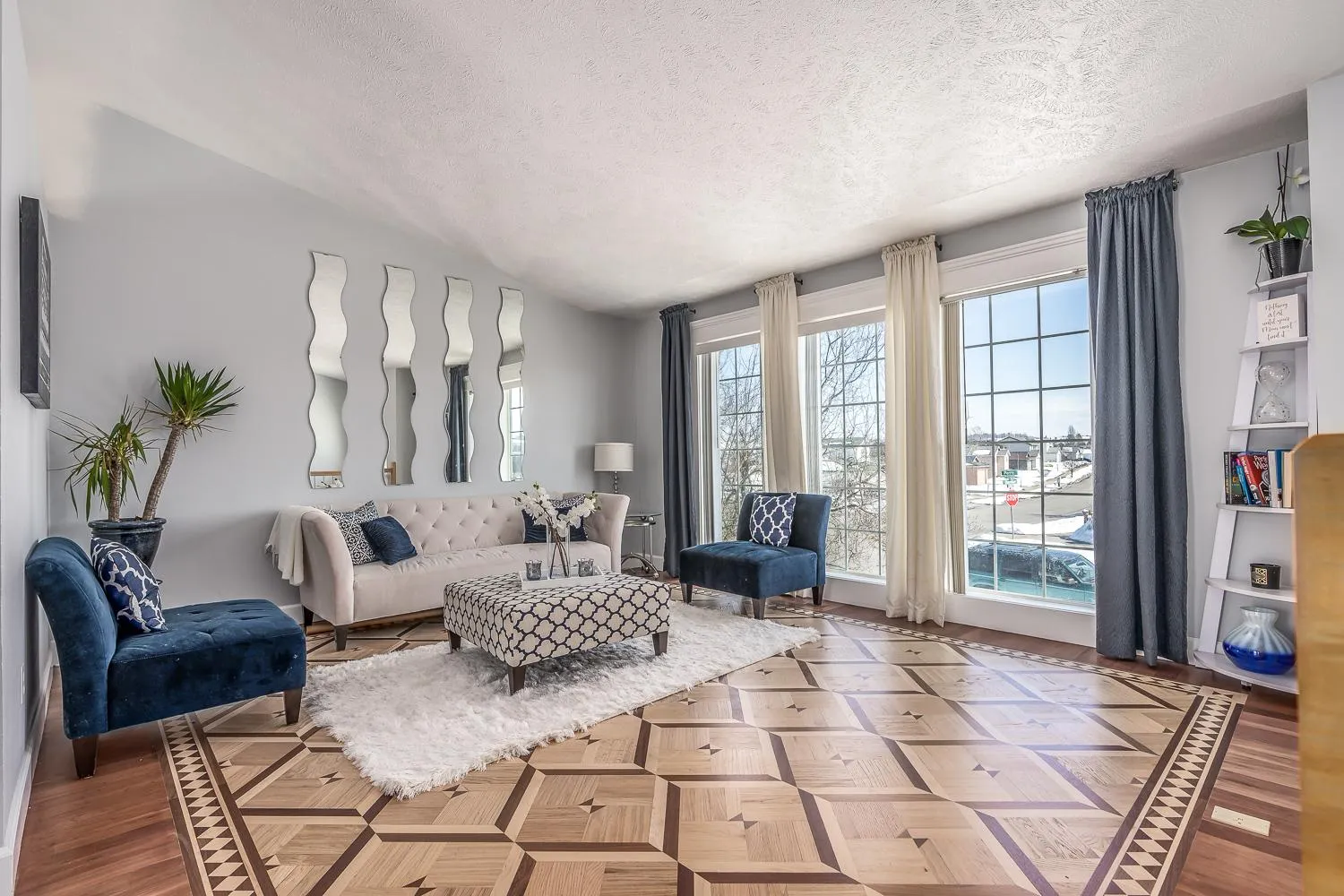
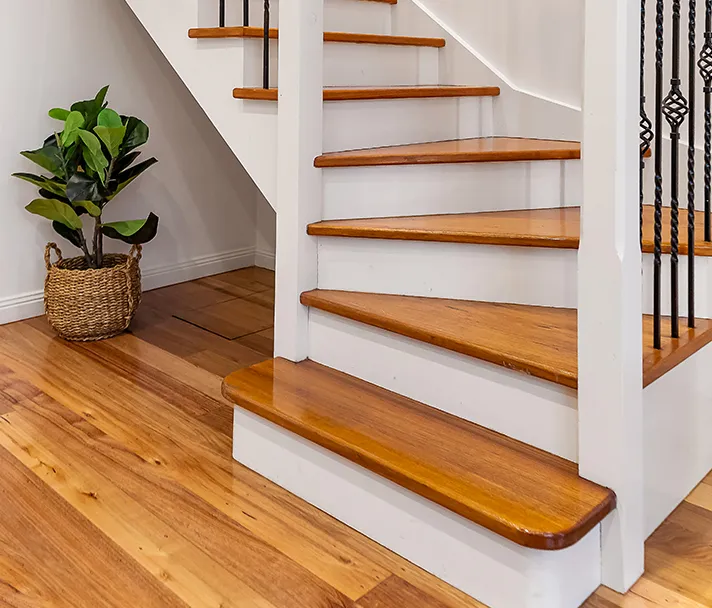
The stuff you can’t fake. Custom parquet, herringbone, chevron, a lace-in mosaic border, a stair run milled to match the floor below — that’s solid-wood work. A printed plank can reproduce a wood look, not real inlay and pattern. The parquet floor that won us a National Wood Flooring Association Wood Floor of the Year award simply doesn’t exist as a vinyl product.
Feel. This one’s subjective, and we’ll flag it as such: real wood underfoot has a warmth and a sound that people notice, even when they can’t name why. If that matters to you, it matters.
Wood does ask for the right conditions. That means real subfloor prep — moisture testing, leveling, letting the boards acclimate to your home’s actual air before a single one goes down. Skip that in a climate that dries wood out every winter and you get gaps and cupping later. Doing it right up front is exactly what our hardwood installation crew builds the schedule around.
A quick way to decide
- Basement, bathroom, laundry, damp slab? LVP. Don’t overthink it.
- Rental or a flip on a tight budget? Laminate or LVP for the value and the speed.
- Living areas of a home you plan to keep, and you want it to last and add value? Solid or engineered hardwood.
- New build on a fresh slab in North Idaho, where the air runs damper? Engineered hardwood is often the steadier bet than solid plank.
- You want pattern, inlay, a custom stair, or you’re restoring an older home’s character? Hardwood, no contest.
Most homes we work on end up mixed: hardwood where it shows and lasts, LVP where water and traffic would punish wood. That’s not a compromise — it’s just matching the material to the room.
If you’re weighing it for your own place, get a free estimate and we’ll walk the house room by room. We’ll tell you where wood’s worth it and where it isn’t, which is easy to do honestly when we install both.